
8 hr
Gran Canaria Rainforest Adventure with Organic Tasting
Journey through ancient laurel forests, volcanic pools, and sustainable farms on this full-day eco-tour
Reserve
Hand-picked by our editors — the 5 best rainforest and mountain experiences from 47 reviewed.
Verified partners for every tour, free cancellation where available, and instant confirmation on every booking.
8 hr
Journey through ancient laurel forests, volcanic pools, and sustainable farms on this full-day eco-tour
Reserve
7 hr
Explore ancient laurel woodlands and endemic flora on a guided 7.5km mountain trail through Gran Canaria's lush northern valleys
Reserve
7 hr 30 min
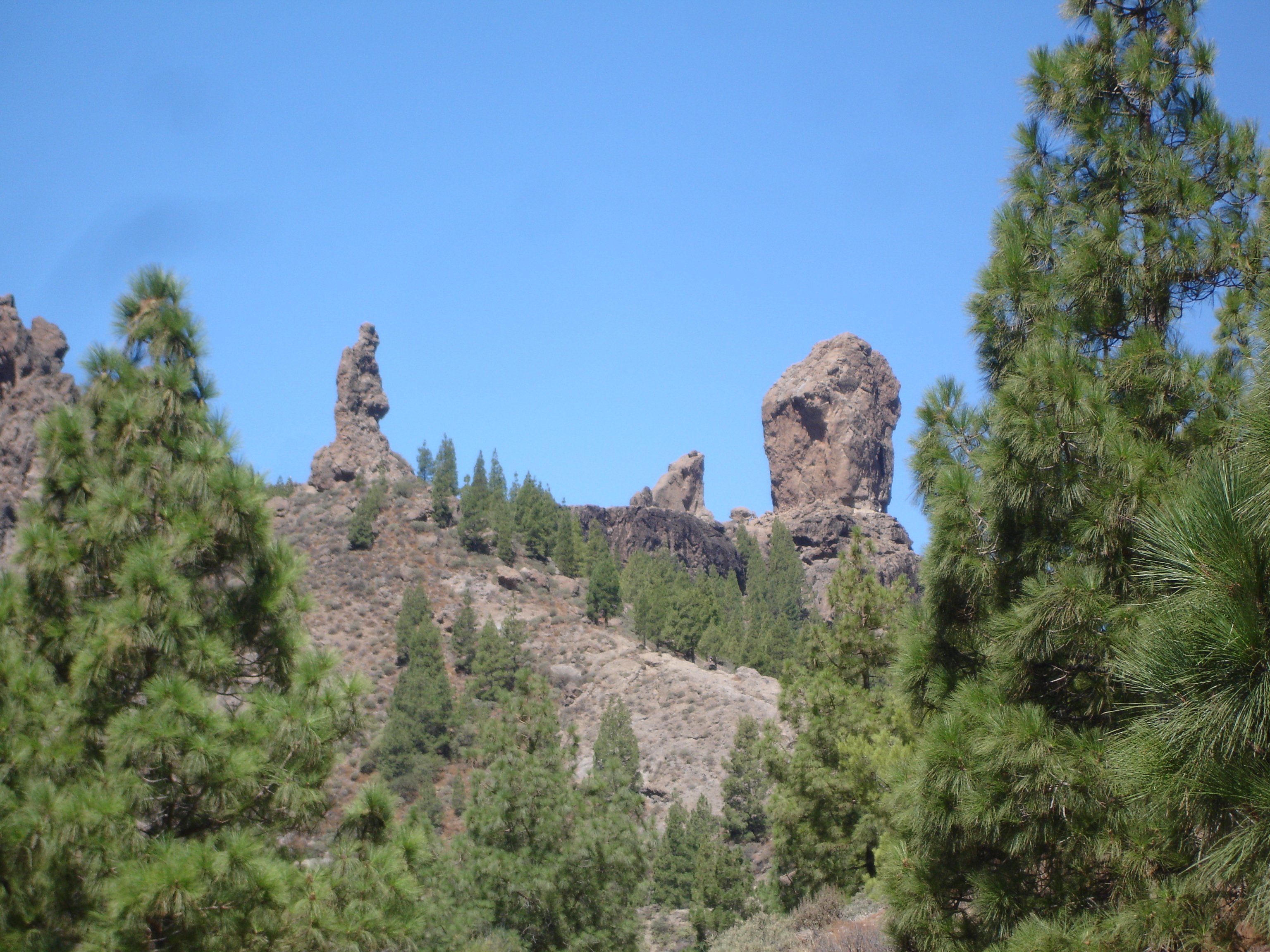
Summit Gran Canaria's highest peak and witness the iconic volcanic monolith on this full-day guided journey
ReservePrices from verified partners. Availability updates in real time at checkout. Free cancellation policies apply where shown.
The landmarks, rooms, and views travelers on this tour remember — all visible on a single visit.
This educational center serves as the starting point for walks through the last redoubt of laurisilva. It features interactive exhibits on local conservation efforts and a botanical garden populated by endangered native species. Visitors can explore the grounds for free from Monday to Friday.
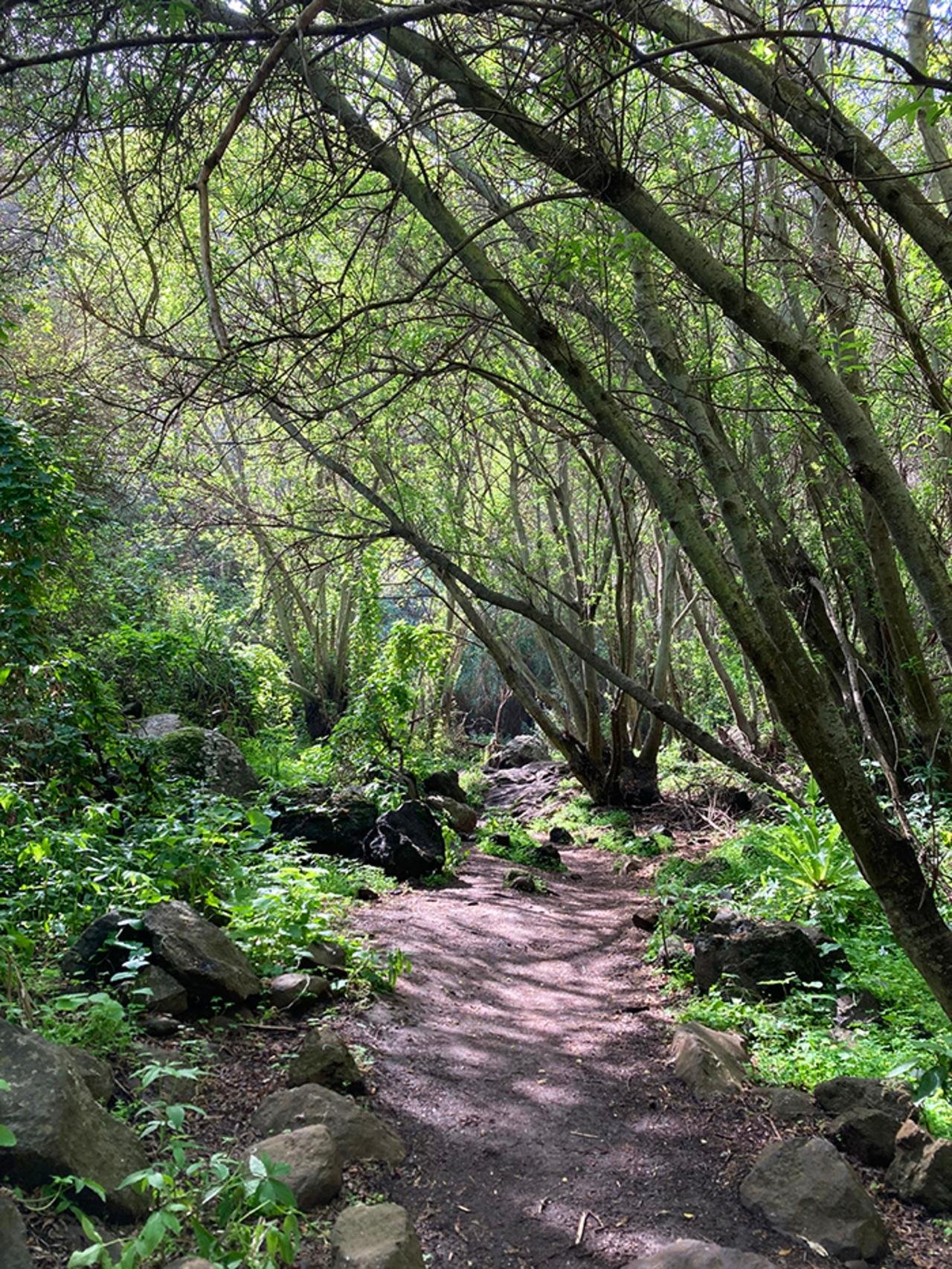
This 1.8-kilometer circular trail winds through a prehistoric forest filled with trees dating back millions of years. It features a gentle slope rising to 559 meters above sea level where a natural freshwater fountain flows. The path is ideal for spotting the rare Bolle's pigeon in the canopy.
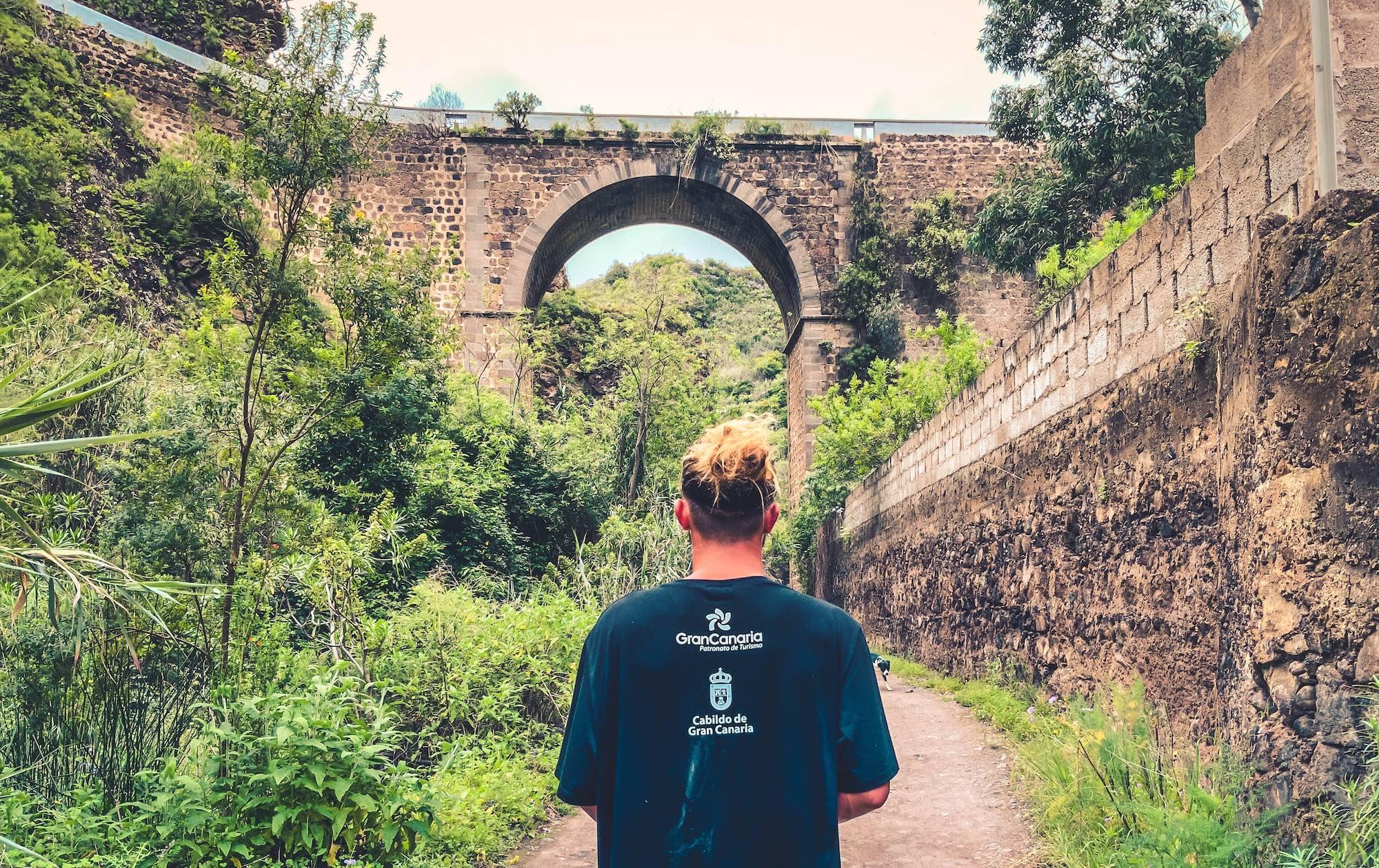
Hidden deep inside the ravine, these ruins belong to a spa hotel built in 1868. The facility was abandoned in the mid-20th century but still draws hikers who marvel at its thermal baths. Today, nature has partially reclaimed the historic brick walls.
This panoramic viewpoint towers over the deepest ravine in northern Gran Canaria. From its safety railings, visitors can gaze down at the sheer vertical walls that measure up to 100 meters high. It provides a perfect vantage point to photograph the dense tree canopy below.
Unlike most dry beds on the island, this watercourse flows year-round through the canyon floor. The constant water source creates a microclimate that nurtures giant ferns and prehistoric mosses. Hikers must balance across stepping stones to complete the ravine crossing.
They complement each other; while you need no rainforest tour gran canaria tickets to enter, Barranco de Azuaje is far more adventurous. The gentle Moya rainforest hike in Los Tilos offers easy walking through the protected nature reserve. However, a guided rainforest tour gran canaria tour is highly recommended for navigating the wet ravine bed of Azuaje safely.
| Feature | Top pick Los Tilos de Moya | Barranco de Azuaje |
|---|---|---|
Trail Difficulty |
Easy and child-friendly | Moderate to challenging with climbing ropes |
Trail Distance |
1.1 miles (1.8 km) circular loop | 3.6 miles (5.8 km) circular loop |
Key Scenery |
Laurisilva woodland and native flora | Waterfalls, stream crossings, and spa ruins |
Terrain |
Paved walkways and flat dirt paths | Wet rocks, muddy beds, and ropes |
Crowds |
Moderate to high, busy on weekends | Low to moderate, mostly local hikers |
Best for |
Families, children, and casual strolls | Adventurous trekkers seeking a scramble |
| See tickets → |
Verdict: For a simple walk, choose Los Tilos, but book professional rainforest tour gran canaria tours if you plan to tackle the slippery ladders and ropes of Azuaje.
Choose your ticket, select your date, and reserve in under two minutes. Secure checkout handled by our verified partner.
Instant confirmation by email, with a mobile voucher you can save offline. No printing, no queuing at a collection desk.
Arrive at the entrance, show your voucher on your phone, and walk in. Most tickets include priority or skip-the-line access.
Practical details for your visit straight from our verified partners — hours, access, rules, and how to get there.
Camino los Tiles, 15, 35421 Moya, Las Palmas, Spain
The starting point for self-guided hikes, featuring a public parking lot.
Take the GC-2 highway north from Las Palmas, then head inland on the GC-75 and GC-704 winding mountain roads toward Moya.
Take Bus Line 117 or 123 from Las Palmas to Moya station, then transfer to a local taxi or walk 2 km to the trail head.
Sturdy hiking boots or closed-toe sneakers are required for anyone booking a rainforest tour Gran Canaria tour to safely navigate wet, rocky paths.
There are no security checkpoints or bag inspections along the public trails. However, hikers should use a sturdy backpack to keep their hands free while climbing over rocky terrain and crossing streams.
Personal photography is encouraged throughout the route, but a commercial rainforest tour Gran Canaria requires permits for drone filming.
Due to narrow rocky trails and stream crossings, the standard paths of the rainforest tour Gran Canaria are not accessible for wheelchairs or those with limited mobility.
Signal coverage drops in the deep ravines, so hikers on a rainforest tour Gran Canaria should download trail maps offline.
Families with children over five years old can enjoy the rainforest tour Gran Canaria, though parents should monitor kids closely near the steep ravine slopes.
While there are no food stalls inside the reserve, booking a guided rainforest tour Gran Canaria tickets often includes a tasting of organic local products.
Leashed dogs are welcome on a self-guided rainforest tour Gran Canaria, but they must not disturb local wildlife.
Always check the weather forecast before heading out, as heavy rain can cause dangerous mudslides and flash floods in the ravine. Pay attention to safety balises indicating closed trail sections.
Camino los Tiles, 15, 35421 Moya, Las Palmas, Spain
The starting point for self-guided hikes, featuring a public parking lot.
Get directionsPaseo de Canarias, 3, 35430 Firgas, Las Palmas, Spain
Meeting point for guided excursions starting in the town center.
Get directionsBest time to go, insider tips, nearby landmarks, and the cancellation fine print — flip through to skim what matters to you.
How crowds, weather, and events shift across the year.
This is the best season to witness the forest at its greenest, with temperatures averaging a pleasant 18°C to 22°C. Wildflowers bloom along the paths, and water levels in the streams are moderate.
Summer brings warmer weather, averaging 24°C to 28°C, making the shade of the laurel canopy very welcome. Arrive early at 08:30 to beat the heat and secure parking before crowds gather.
Autumn offers stable weather with temperatures around 20°C. It is an excellent time for photography as the forest mist creates a mystical atmosphere in the early mornings.
Winter brings cooler temperatures of 14°C to 18°C and occasional rainfall. The stream flow is at its highest, but paths can become muddy, requiring extra caution and waterproof shoes.
Small details that turn a good visit into a great one.
The parking lot near the Los Tilos de Moya Interpretation Center has only a few spaces and fills up rapidly on weekends.
Cellular coverage drops off completely once you descend into the Barranco de Azuaje ravine, making offline GPS essential.
You will cross small streams and damp rocky pathways, so waterproof hiking shoes are highly recommended.
If your itinerary includes a stop at El Puertillo, bring swimwear to enjoy the natural volcanic pools safely.
The local government will close trails during extreme rain or heat alerts, so verify status before departing.
Bring a secure backpack to carry your gear, as loose bags are prone to tearing and create litter risks.
Non-bookable sights within a short walk — free to visit, easy to pair.
A landmark church in Moya overlooking a deep ravine, featuring historic stained glass.
A famous pedestrian street in Firgas boasting a 30-meter artificial waterfall and hand-painted tile benches.
A historic watermill from 1517 in Firgas, still operating today as a museum of gofio production.
A quiet scenic overlook in Firgas offering sweeping views of the northern coastline.
Flexible, no hidden fees.
As the forest reserve has a 0 EUR entry fee, cancellations for the guided rainforest tour Gran Canaria tours must be made 48 hours in advance for a full refund.
Hand-picked options within walking distance — pick a district for vibe, or a specific hotel for convenience.
A historical estate in Teror offering outdoor pools and surrounded by fruit trees.
A restored colonial estate situated within a banana plantation, featuring a heated pool.
Various local guesthouses and rural homes located within the municipality of Moya near the trails.
The laurisilva forest that cloaks the ravines of Doramas is older than the Mediterranean basin itself. These evergreen laurel groves — Laurus novocanariensis, Apollonias barbujana, Persea indica — are relicts of the Tertiary period, survivors of an Ice Age that wiped their cousins from continental Europe fifteen million years ago. Today they persist in a narrow band across Macaronesia, and Gran Canaria's northern slopes hold one of the densest surviving stands. The forest breathes. Trade winds carry Atlantic moisture into the steep barranco walls, condensing into a near-permanent mist that drips from waxy leaves and feeds the moss-draped understory. Annual precipitation here exceeds 800 millimeters, ten times the island's arid southern coast, and the microclimate sustains species found nowhere else on Earth. The Los Tilos Interpretation Centre, opened in 1998 and renovated in 2014, anchors public access to the reserve. Its exhibits trace the ecological history of the laurisilva and the agricultural collapse that nearly erased it. By the sixteenth century, settlers had cleared vast tracts for sugarcane and grain; by 1950, charcoal burners had pushed into the last ravines. Protection came late. The Doramas Rural Park, declared in 1987, encompasses 3,600 hectares of regenerating forest, terraced farmland, and volcanic ridgeline. The designation halted logging and redirected foot traffic onto marked trails. Today the reserve supports endemic pigeons, Canarian blue tits, and the rare Gran Canaria skink. Botanists catalog over sixty vascular plant species within a single hectare. A rainforest tour Gran Canaria expedition rewards patience. The forest does not announce itself with parrots or waterfalls; it whispers. Trails wind through tunnels of interlocking branches, where sunlight fractures into green-gold shafts. The dominant laurels grow slowly — a hand-width trunk may be a century old — and their root systems bind the steep volcanic ash into stable slopes. Undergrowth includes tree heather, Canary Island holly, and the carnivorous butterwort, which traps insects on sticky rosettes. Silence here is layered: wind in the canopy, the trickle of invisible springs, the rustle of endemic lizards in leaf litter. The forest is a monument to resilience, a fragment of a vanished world clinging to a ridge where mist and basalt meet.
"The laurisilva is a monument to resilience, a fragment of a vanished world clinging to a ridge where mist and basalt meet."
A step-by-step walkthrough of the visit — what you'll see, how long each stage takes, and the details that matter.
You arrive at the Los Tilos Interpretation Centre before nine, when the ravine is still cool and the parking area near empty. The trailhead begins behind the stone-and-timber building, marked by weathered signage in Spanish and English. You follow the Sendero de los Tilos, a two-kilometer loop that descends into the barranco and climbs back along the opposite wall. The path is compact volcanic gravel, wide enough for single file, with wooden steps bolted into the steepest pitches. Ten minutes in, the canopy closes overhead. The air thickens with the scent of damp earth and laurel resin. Moss drapes every exposed root; ferns sprout from crevices in the basalt. You pause at a viewpoint where the trail opens onto a narrow ridge. Below, the forest floor disappears into mist. Above, the hillside is terraced with abandoned stone walls, relics of wheat fields reclaimed by saplings. You continue downhill, crossing a seasonal stream on flat stones, then begin the slow ascent. The trail switchbacks through a grove of ancient laurels, their trunks furred with lichen. By the time you return to the centre, ninety minutes have passed. Your boots are dusted with red clay, and the ridge behind you has dissolved into cloud.
The Los Tilos de Moya reserve trails are open daily from 00:00 to 23:59, though joining a guided rainforest tour Gran Canaria usually starts around 08:30 to secure parking and complete the trail before the afternoon heat.
Entering the forest is free, but choosing a structured rainforest tour Gran Canaria provides professional guiding and transport across the island.
A typical itinerary covers key areas like the historic town of Firgas, the Azuaje Ravine hike in the Doramas Forest, and a local organic farm.
Yes, guided bookings include convenient air-conditioned transport to bring you to the Doramas Forest from Las Palmas and southern resorts.
The core hike lasts about two hours, covering roughly three kilometers of uneven terrain within the beautiful Doramas Forest.
Yes, children aged five and older are welcome on the trail through Los Tilos de Moya, provided they are comfortable walking on uneven surfaces.
Leashed dogs are permitted on the public trails of Los Tilos de Moya, but they must remain under control to protect the sensitive local wildlife.
Since the visitor center in Los Tilos de Moya is free and rarely crowded, there are no queue skip tickets, but coming early avoids the midday visitor rush.
You should pack a backpack with a swimsuit, a towel for the natural pools at El Puertillo, sunscreen, and at least 1.5 liters of drinking water for your trek in the Doramas Forest.
The best starting point is the Los Tilos de Moya Interpretation Center, which offers parking, maps, and toilets before you enter the trail.